

SPLASH and ISSTA 2026 in Oakland: Travel Guide
- Dates: October 3 - 9, 2026
- Venue: Oakland Marriott City Center
- Airport: OAK is 20 minutes by BART; SFO about an hour
- Booking: It is Oakland, not San Francisco. Stay this side of the bay
- Downtime: Jack London Square, Temescal, and redwoods twenty minutes uphill
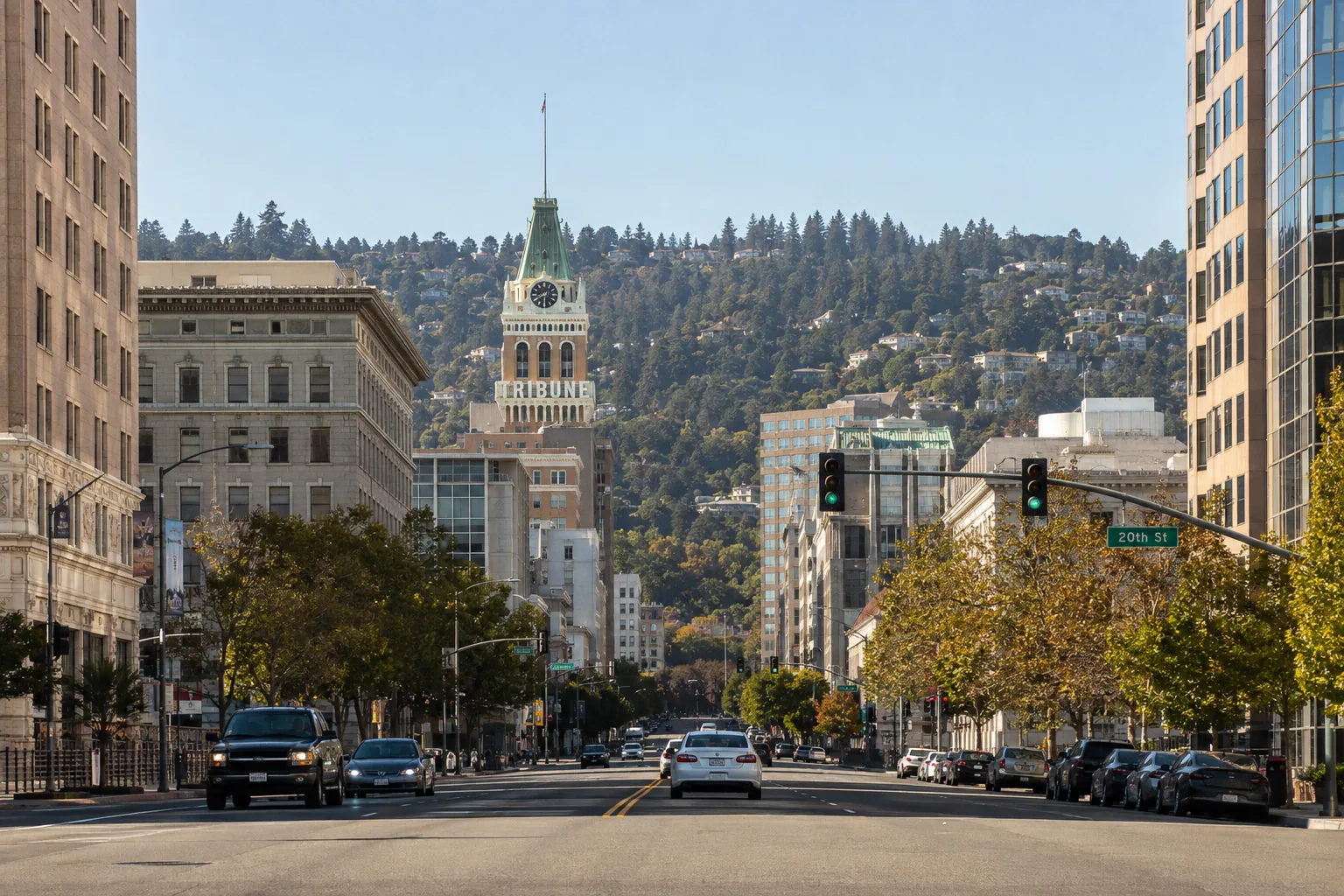
SPLASH 2026 and ISSTA 2026 are not two trips. They are one week, in one building, and the organisers have stopped pretending otherwise: the event is billed as SPLASH/ISSTA 2026, running 3 to 9 October at the Oakland Marriott City Center.
If you work in programming languages or software testing, this is the densest week of the year.
What is actually in the week
The joint programme is unusually large for a single hotel:
- OOPSLA, the main research track, plus Onward! for essays and more speculative papers, and SPLASH-E for the education side
- ISSTA, the flagship software testing and analysis symposium, with its own research track and artifact evaluation
- SAS, the Static Analysis Symposium, co-located again
- A doctoral symposium, a summer school, and the REBASE industry track
- Ten workshops: VMIL on virtual machines and language implementation, IWACO on aliasing, capabilities and ownership, NSAD on numerical and symbolic abstract domains, HATRA on the human side of types and reasoning assistants, PLSS on language standardisation, LMPL on language models and programming languages, EXPRESS on explainable and reliable systems, SpecOps on specification-driven development, SSNL on software across the US National Laboratories, and FTA on firmware testing and analysis
That last line is the one to plan around. If your work sits in a niche, there is a good chance a workshop exists for precisely it, and the room will be twenty people who care rather than four hundred passing through. Budget for the full week rather than flying in for two days of main track.
A caution on one of them: EXPRESS here is not the EXPRESS/SOS concurrency workshop you may know from CONCUR. It shares the acronym and nothing else, and is a second-edition workshop on explainable and reliable software systems. Check the page before you submit to the wrong venue.
It is Oakland, not San Francisco
This is the mistake to avoid, and it is an easy one to make. “Bay Area conference” reads as San Francisco to most people, and the instinct is to book somewhere near Union Square and commute. Do not.
The venue is at 1001 Broadway in downtown Oakland, which is its own city across the bay. Staying in San Francisco means a BART ride through the Transbay Tube twice a day, and BART stops running overnight, so the last train quietly becomes the thing that ends your evening. Oakland rooms are also generally cheaper than comparable San Francisco ones.
The good news is that downtown Oakland is compact and the venue is about as well connected as a conference hotel gets: the 12th Street / Oakland City Center BART station is a three to five minute walk, essentially across the street.
Where to stay
Distances are from the Oakland Marriott City Center.
The venue is the hotel. Oakland Marriott City Center (details) is where the conference happens, so the walk to the first session is a lift ride. For a seven day programme with early workshop starts that is worth paying for, and it is the block that goes first.
Next door. The Washington Inn (details) is a small historic hotel 220 metres away, a three minute walk, and the obvious fallback once the Marriott fills.
Uptown, ten to fifteen minutes on foot. Moxy Oakland Uptown Hotel (details) is the budget-leaning option with small rooms and a busy lobby bar, good for grad students. Kissel Uptown Oakland - In the Unbound Collection by Hyatt (details) is the design-led four-star at the other end of the range.
By the water. Waterfront Hotel - Part of JdV by Hyatt (details) sits in Jack London Square, about a kilometre south, and swaps the downtown walk for an estuary view and the better evening options.
Cheapest. Executive Inn & Suites Oakland (details) is three kilometres out near the estuary, and is the one to take if the nightly rate is the binding constraint.
The full list is on the Oakland city page, and the block-versus-independent question is covered here. If you do end up across the bay, our San Francisco guide covers that side.
Getting in
Oakland International (OAK) is the one to aim for. It is about nine miles from downtown and roughly twenty minutes door to door on BART, changing to the airport connector at Coliseum. For a conference in downtown Oakland it beats SFO comfortably.
San Francisco International (SFO) has far more long-haul routes and is still fine: BART runs directly from the airport to Oakland in about an hour, no transfer needed beyond the usual line change. San Jose (SJC) is the third option and the least convenient without a car.
Once you are here, BART plus walking covers everything. Buy a Clipper card or use contactless.
Between sessions
Jack London Square is the waterfront strip about fifteen minutes’ walk south, and the natural place for a conference dinner. It has the estuary, a Friday farmers market, and Heinold’s First and Last Chance Saloon, a tiny 1883 bar built from the timbers of a whaling ship, with a floor that has sloped since the 1906 earthquake. It is the sort of place that makes a good story later.
Temescal and Uptown are where Oakland’s food reputation actually lives, a short BART hop or a twenty minute walk north. Temescal in particular is strong for East African and Vietnamese food, and prices are noticeably below San Francisco for the same quality.
Lake Merritt is a tidal lagoon ringed by a walking path a few blocks east of the venue, and the easiest way to get outside without planning anything. Three and a half kilometres around.
The redwoods are twenty minutes away. This is the thing most visitors miss. Redwood Regional Park and Joaquin Miller Park sit in the hills directly above the city, with old-growth-scale coast redwoods and trails that feel a very long way from a hotel ballroom. If you have a free afternoon and a rideshare, take it.
Early October is a good time to be here. Oakland sits east of the bay and gets more sun and less fog than San Francisco, and early autumn is reliably the warmest, clearest stretch of the year.
If you are submitting rather than attending
The co-location is the useful part. OOPSLA and ISSTA draw overlapping but distinct crowds, and a week where programming languages, static analysis and software testing share a corridor is the best chance in the calendar to find the reviewer-shaped people who will read your next paper.
For where these sit against the wider field, both are in the software engineering and programming languages band we mapped in the acceptance-rate analysis, which runs tighter than machine learning and looser than systems.
And if you are planning further ahead, PLDI 2027 is part of FCRC in Atlanta from 5 to 11 June, co-located with ISCA, STOC and SIGMETRICS. FCRC happens roughly every four years, so for anyone in this community it is the other week worth building a year around. Full details on the SPLASH and ISSTA conference pages.