

Robotics: Science and Systems — 2026
July 13-17, 2026
University of Technology SydneySydney, Australia
Robotics Autonomous Systems Machine Learning AI
Important Dates
| Submission deadline | January 30, 2026 (closed) |
Robotics: Science and Systems is a single-track robotics conference with a deliberately small programme, which makes it one of the most selective venues in the field. It covers robot perception, planning, control, manipulation, learning and human-robot interaction. The single-track format means every attendee sees every paper rather than choosing between parallel sessions, so a paper here reaches the whole community rather than one session’s worth of it. That suits researchers who value readership over volume, and makes RSS a harder but higher-visibility target than the large robotics conferences. Ranked A* by CORE.
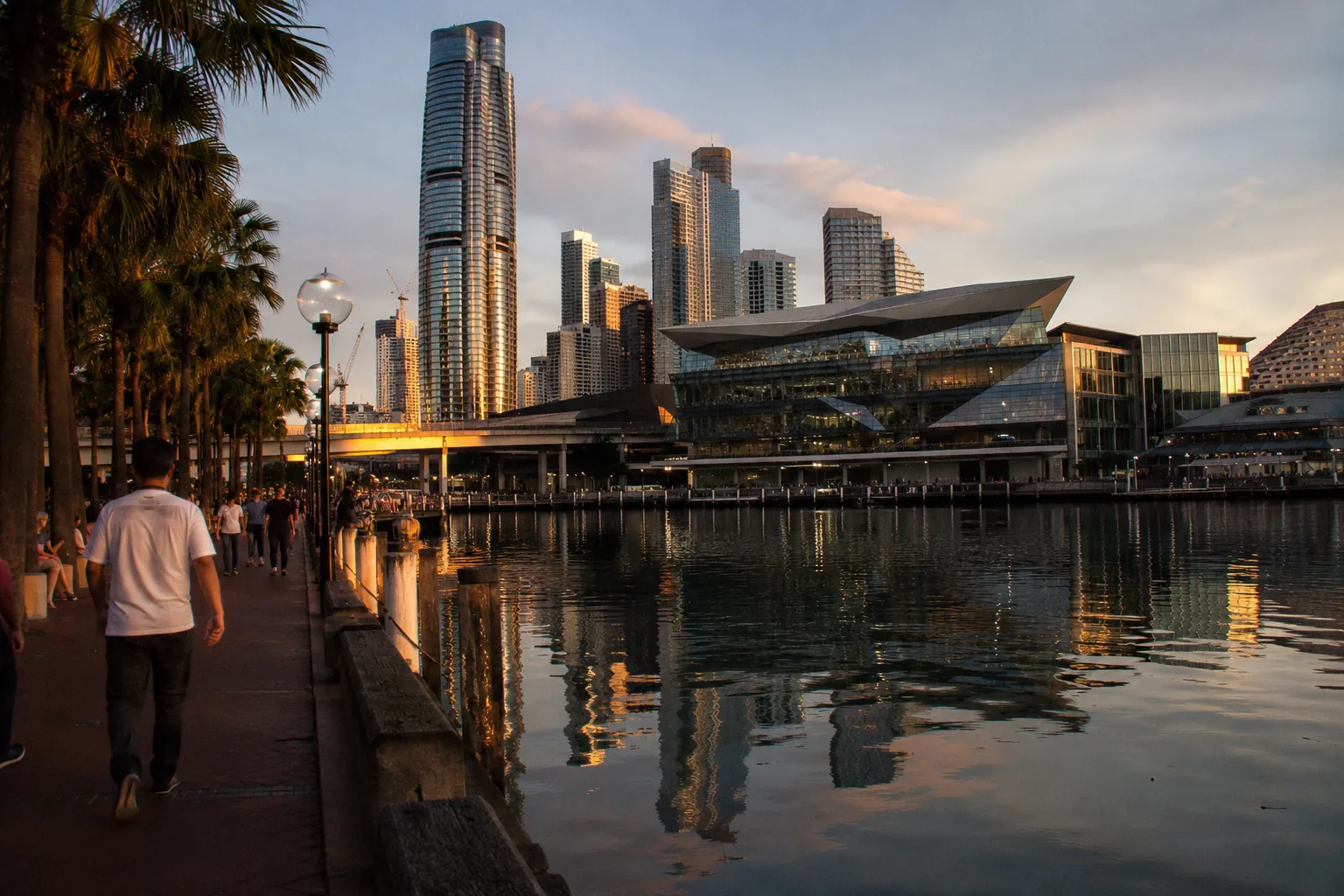
Venue
University of Technology Sydney
15 Broadway, Ultimo NSW 2007, Australia
🔗 View full venue details
Beyond Rigidity: Deformable and Articulated Robotic Object Manipulation
Addresses robotic manipulation of non-rigid objects - deformable items like clothes and cables, plus articulated objects like drawers and laptops....
Data-Centric Robotics: What Data Do Robots Really Need?
Examines the critical role of data in robot learning, asking what kinds of data matter most and at what scale...
It's the Demos: A Deep Look at the Role of Demonstration Quality in Imitation-Based Robot Manipulation
Examines how demonstration quality fundamentally shapes imitation-based robot manipulation systems. Brings together researchers to establish shared metrics, best practices, and...
4th Workshop on Dexterous Manipulation: Scalable Learning for Human-Level Skills
Focuses on scaling dexterous manipulation by leveraging advances in robotic hand hardware, large-scale video datasets, and simulation-to-reality transfer pipelines. Addresses...
Diffusion for Robot Learning
Explores how diffusion models can be applied to robot learning for both data generation and intelligent control. Aims to aggregate...
Embodied4Arts: Robots as Creative Partners for Artistic, Expressive, and Craft Tasks
Explores how robots can learn to perform creative tasks like painting, music, and crafting by translating high-level artistic intent into...
Reason, Plan, Act: A Hands-On Tutorial on Embodied Agentic AI
Teaches participants how to build autonomous AI systems that combine large language models with robotics, covering LLM-powered agentic AI architectures...
Failure Is Not the End: Towards Open-World Failure Recovery for Robots
Addresses how robots can detect, diagnose, and recover from failures when operating in open-world environments with unpredictable conditions. Explores methods...
Robot Planning in the Era of Foundation Models (FM4RoboPlan)
Explores how foundation models such as LLMs, vision-language models, and diffusion models are transforming robot planning. Examines integration with traditional...
Rethinking What It Means to be Safe for Generalist Robots
Addresses how to redefine safety for generalist robots that operate across diverse tasks and environments, moving beyond traditional constraint-based approaches...
The Geometry of Motion: Physics-Informed Structures for Learning and Control
Examines how geometric and physics-based principles such as Lie group theory and Riemannian geometry can improve robot learning and control...
Human-centric Mobile Manipulation Workshop
Addresses how mobile manipulation robots can effectively operate alongside humans in real-world environments by developing intuitive human-robot interaction and human-aware...
From Imitation to Certification: Learning, Reasoning, and Formal Methods for Safe Robot Manipulation
Brings together researchers from imitation learning, AI, control theory, and formal verification to address safety and trustworthiness in robotic manipulation....
Lab-to-Production Workshop: Toward Industrial-Grade Perception and Manipulation
Addresses the gap between robotics research and industrial deployment by examining how to translate advances in autonomous perception and manipulation...
Workshop on Neuromorphic Robotic Systems (NeuRoSys)
Examines how neuromorphic sensing and perception - technologies inspired by biological neural systems - can be integrated into robotic systems...
Open-World Navigation in the Foundation Model Era: Robustness and Failure Recovery
Examines robust navigation systems for robots in unpredictable environments by leveraging foundation models while addressing their inherent brittleness. Investigates failure...
Planning and Control with Imperfect Sensors and Perception
Examines how autonomous robots can make decisions when their perception systems are imperfect and uncertain, focusing on integrating modern semantic...
Post-training for Robotics Foundation Models
Examines how robotics foundation models can improve beyond initial pretraining by collecting their own interaction data and iteratively refining policies....
From Perception to Action: Representation-Centric Robot Autonomy
Examines how different map and scene representations - geometric, probabilistic, dense, implicit, or learned - fundamentally influence the entire autonomy...
Mapping the Reef: Underwater 3D Reconstruction for Coral Ecosystems
Focuses on developing and advancing 3D mapping technologies for monitoring coral reef ecosystems. Brings together researchers to share and compare...
Reinforcement Learning for Vision-Language-Action Models (RL4VLA)
Addresses how reinforcement learning can improve Vision-Language-Action models for robotics by moving beyond imitation learning limitations. Explores methods to enable...
Robot World Models
Focuses on developing world models - internal simulators that enable robots to anticipate how the world will respond to actions...
Sampling-Based Optimization for Robotics
Examines sampling-based techniques in robotics, exploring how methods from reinforcement learning and predictive control can handle complex dynamics and uncertainty....
3rd Workshop on Semantic Reasoning and Goal Understanding in Robotics (SemRob 2026)
Focuses on how robots achieve semantic understanding of the world to make safe decisions and interact effectively with other agents....
Closing the Sim2Real Gap: Progress and Challenges
Addresses the research challenge of bridging the gap between simulation and real-world robotics implementation. Examines recent advances and ongoing obstacles...
Bridging AI and Robotics: Towards Safer and Smarter Surgery
Explores the integration of AI and robotics in surgical applications, focusing on intelligent and autonomous systems that can perceive, learn,...
Tactile Sensing for Robotic Foundation Models
Explores how tactile sensing can be integrated into robotic foundation models at scale, addressing hardware design, system integration alongside vision...
Embodied Intelligence Meets Foundation Models: Tactile Sensing and Soft Manipulation
Focuses on integrating tactile sensing, soft robotics, and foundation models to advance dexterous object manipulation for robots in human environments....
Trustworthy Embodied Foundation Models: Safety by Design versus Safety by Practice
Addresses safety challenges of deploying foundation models in robotic systems, exploring safety by design through training and architecture choices versus...
Towards Robust Execution of Long-Horizon Whole-Body Control Tasks
Addresses robot learning for complex extended tasks, focusing on deploying humanoids and manipulators on long-horizon tasks in the real world....
Whole-body Control and Bimanual Manipulation: Applications in Humanoids and Beyond
Brings together roboticists and machine learning researchers to discuss advances in whole-body control and bimanual manipulation, with a focus on...
Beyond the Lab: Rethinking Methods for Human Behavior Monitoring and Modeling in In-the-Wild Human-Robot Interaction
Examines methodologies for observing and understanding human behavior in real-world robotic deployments, addressing the challenge that findings from controlled studies...
Our picks for Robotics: Science and Systems attendees
A curated selection of hotels chosen for location, value, and fit for conference travellers.
Four Seasons Hotel Sydney
199 George Street, Sydney NSW 2000, Australia
Circular Quay luxury tower with Opera House and Harbour Bridge views from the upper floors - the splurge pick for attendees who...
Hyatt Regency Sydney
161 Sussex Street, Sydney NSW 2000, Australia
Australia’s largest hotel, on the Darling Harbour side of the CBD an easy walk from the ICC, with a rooftop bar overlooking...
Meriton Suites Kent Street
528 Kent Street, Sydney NSW 2000, Australia
Apartment-style suites with kitchens and laundry a 10 minute walk from the ICC - well-suited to families, long stays, and attendees who...
Novotel Sydney Darling Square
17 Little Pier St, Sydney NSW 2000, Australia
Directly across from ICC Sydney with easy walking access to Darling Harbour’s waterfront dining.
PARKROYAL Darling Harbour Sydney
150 Day St, Sydney NSW 2000, Australia
Polished four-star hotel a five-minute walk from ICC Sydney with full fitness facilities.
Sofitel Sydney Darling Harbour
12 Darling Drive, Sydney NSW 2000, Australia
Directly adjacent to ICC Sydney with a rooftop infinity pool and five restaurants and bars.
W Sydney
31 Wheat Rd, Darling Harbour, Sydney NSW 2000, Australia
Bold luxury hotel in Darling Harbour with a rooftop WET deck pool and multiple dining venues, five minutes from ICC Sydney.
Wake Up! Sydney Central
509 Pitt Street, Sydney NSW 2000, Australia
Award-winning backpacker hostel opposite Central Station with private rooms and dorms - the budget answer for students at Sydney’s expensive December peak,...