

Conference on Computer Vision and Pattern Recognition — 2026
June 3-7, 2026
Colorado Convention CenterDenver, Colorado, United States
Computer Vision Machine Learning
Important Dates
| Submission deadline | November 6, 2025 (closed) |
| Notification of acceptance | February 20, 2026 (passed) |
The Conference on Computer Vision and Pattern Recognition is one of the most influential gatherings in artificial intelligence, focusing on advances in visual perception, image and video analysis, 3D understanding, generative models, and scene interpretation. The conference highlights both theoretical innovation and scalable real world applications across robotics, healthcare, autonomous systems, creative media, and interactive technologies, covering visual recognition, generative vision, segmentation, detection, tracking, and multimodal learning, with emphasis on efficiency, robustness, fairness, security, and deployment. Recent editions have been highly competitive: CVPR 2025 accepted 2,878 of 13,008 submissions, an acceptance rate of 22.1%.
Going to CVPR?
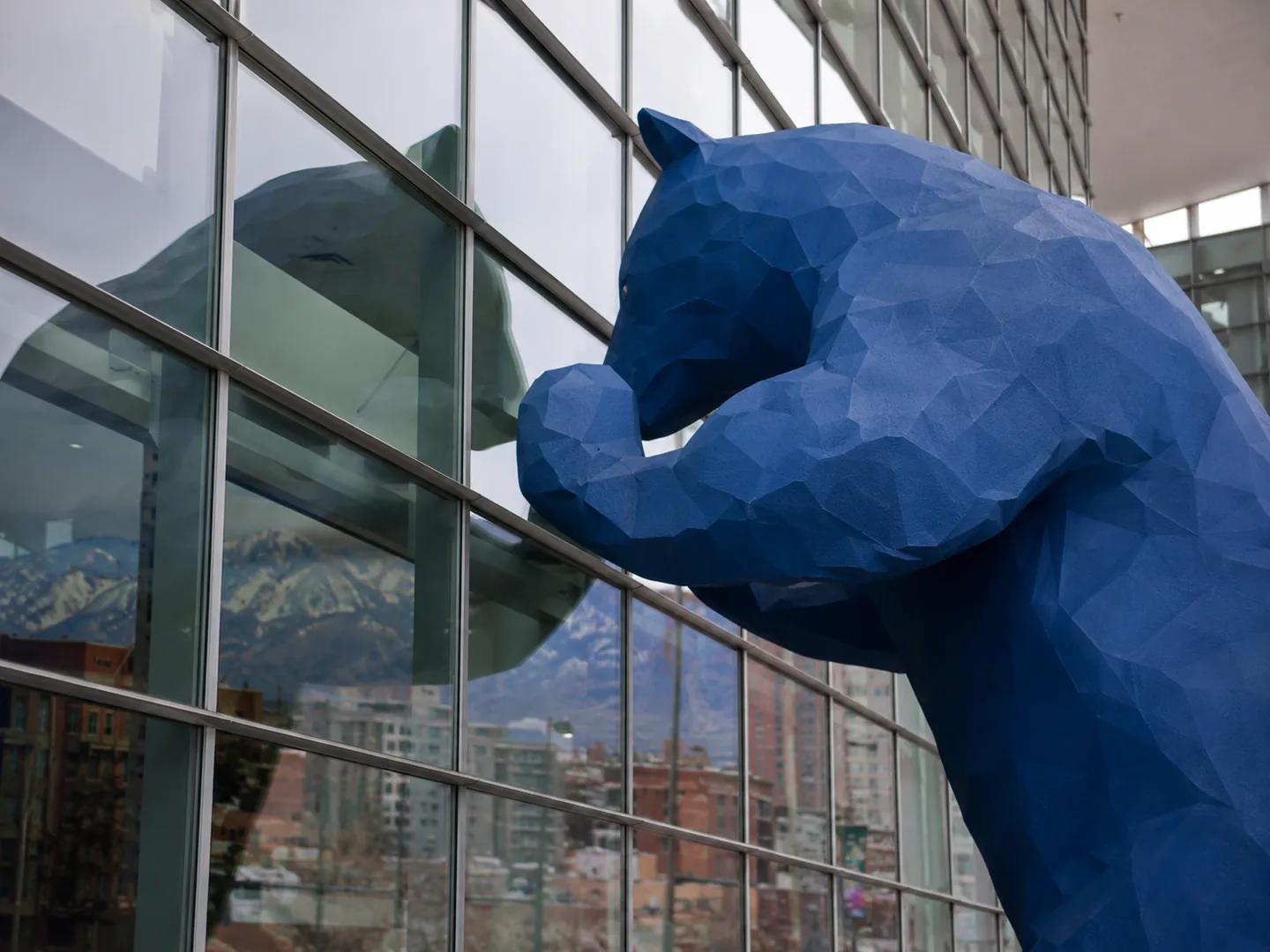
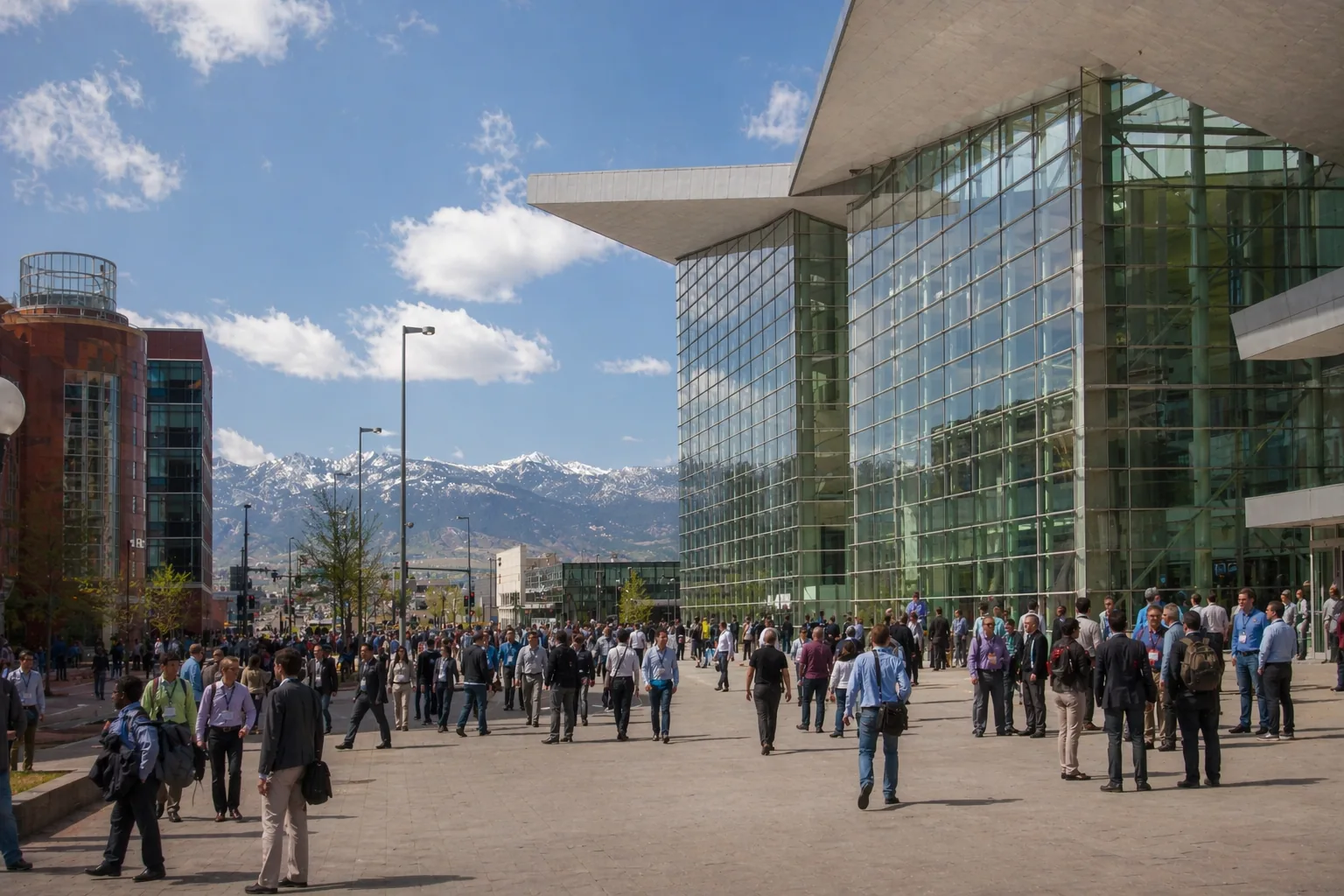
Venue
Colorado Convention Center
700 14th St, Denver, CO 80202
🔗 View full venue details
3D Multi-View Supervision Workshop
Explores learning-based approaches to 3D scene reconstruction and understanding using multi-view image supervision.
3D Scene Understanding for Vision and Graphics
Covers semantic 3D scene reconstruction, object detection, and layout estimation for robotics and graphics applications.
4D Vision Workshop
Focuses on modeling dynamic 3D worlds over time, covering video understanding, point cloud sequences, and spatiotemporal reconstruction.
Affective Behavior Analysis in-the-wild
Addresses facial expression, action unit, and emotion recognition from real-world unconstrained video and images.
Adversarial Machine Learning on Computer Vision
Examines adversarial attacks and defenses in computer vision systems, with a focus on the safety of vision-language agents.
Agriculture-Vision Workshop
Advances aerial and ground-based vision for precision agriculture, crop monitoring, and yield estimation.
Artificial Intelligence for Space
Applies vision and AI to space exploration tasks including terrain mapping, spacecraft navigation, and satellite imagery analysis.
AI-Generated Media and Security
Addresses detection of deepfakes, synthetic media forensics, and the security implications of generative vision models.
Authenticity and Provenance in Generative AI
Explores content authentication, watermarking, and provenance tracking for AI-generated images and videos.
Computational Cameras and Displays
Bridges optics and computation for next-generation imaging and display systems, from HDR capture to neural rendering.
Computer Vision for Animal Behavior
Applies computer vision to animal tracking, behavior recognition, and ecological monitoring in the wild.
Computer Vision in the Wild
Advances vision models that generalize beyond curated benchmarks to open-world, real-world, and multimodal settings.
Computer Vision for Microscopy Image Analysis
Bridges computer vision and biomedical imaging for analysis of microscopy, pathology slides, and biological imagery.
Computer Vision in Sports
Applies computer vision to sports analysis including player tracking, action recognition, and performance analytics.
Embodied Artificial Intelligence Workshop
Advances embodied agents that perceive, reason, and act in simulated and real environments through vision and interaction.
EarthVision: CV for Remote Sensing
Applies computer vision to satellite and aerial imagery for earth observation, environmental monitoring, and geospatial analysis.
Efficient Deep Learning for Computer Vision
Focuses on model compression, quantization, pruning, and hardware-efficient inference for real-world vision deployment.
Efficient On-Device Generation
Covers efficient generative models for on-device inference, including mobile diffusion and compressed vision transformers.
Egocentric Vision Workshop
Focuses on first-person video understanding, activity recognition, and interaction detection from wearable cameras.
Embodied Reasoning in Action
Focuses on robotic manipulation through visual reasoning, with benchmark challenges for perception-to-action pipelines.
Fine-Grained Visual Categorization
Addresses recognition of subtle visual differences across species, products, and object subtypes with large-scale benchmarks.
Foundation Models for Medical Vision
Explores large pre-trained models adapted for medical imaging tasks including segmentation, detection, and report generation.
Eye and Gaze in Computer Vision
Advances gaze estimation, eye tracking, and gaze-based interaction for AR/VR, accessibility, and human-computer interaction.
Generative Models for Computer Vision
Covers generative image and video models including diffusion, GANs, and flow-based methods applied to vision tasks.
Human Motion Generation Workshop
Covers generation and synthesis of realistic human body motion for animation, avatars, and embodied agents.
Image Matching Workshop
Covers local feature detection, descriptor matching, and 3D reconstruction for image correspondence tasks.
Long-form Video Understanding
Advances understanding of long-duration videos covering temporal reasoning, summarization, and action recognition.
Mobile AI Workshop
Benchmarks and advances AI efficiency on mobile devices including image processing, super-resolution, and neural architecture search.
Multimodal Algorithmic Reasoning
Explores structured reasoning in vision-language models, including mathematical, spatial, and logical problem solving from visual input.
Multimodal Foundation Models Workshop
Explores the frontier of multimodal large models combining vision, language, audio, and action.
Foundation Models for Remote Sensing
Investigates large vision models for remote sensing applications including change detection, segmentation, and scene classification.
Multimodal Spatial Intelligence
Advances spatial understanding in multimodal systems, connecting vision, language, and 3D scene reasoning.
NTIRE Image Restoration Workshop
Hosts challenges and research on image super-resolution, denoising, deblurring, and low-light enhancement.
Open-World 3D Scene Understanding
Challenges open-vocabulary 3D scene understanding using foundation models for indoor and outdoor environments.
Precognition Workshop
Focuses on anticipatory vision - predicting future states of people, vehicles, and environments from visual input.
Simulation for Autonomous Driving
Explores simulation environments, synthetic data generation, and sim-to-real transfer for autonomous driving research.
Synthetic and Adversarial Forensics
Addresses detection and forensic analysis of synthetic and adversarially manipulated visual media.
ScaleBot: Scalable Robot Learning Systems
Examines how robot learning systems can scale via data, compute, and foundation model pre-training.
Synthetic Data for Computer Vision
Explores synthetic and procedurally generated training data for improving model robustness and reducing annotation costs.
Transformers for Vision
Explores transformer architectures for image, video, and multimodal tasks including vision-language models.
UG2+ Workshop
Challenges participants to improve vision systems under adverse conditions including fog, rain, and low light.
Video Generative Models Benchmarks
Establishes rigorous evaluation frameworks and benchmarks for text-to-video and video generation models.
VizWiz Grand Challenge
Advances AI assistance for blind and low-vision users through visual question answering and image description tasks.
Workshop on Autonomous Driving
Covers perception, prediction, and planning for self-driving vehicles, including benchmark challenges and real-world deployment.
Explainable AI for Computer Vision
Develops interpretability and explainability methods for deep vision models, addressing transparency in safety-critical applications.
Our picks for Conference on Computer Vision and Pattern Recognition attendees
A curated selection of hotels chosen for location, value, and fit for conference travellers.
Embassy Suites by Hilton Denver Downtown Convention Center
1420 Stout St, Denver, CO 80202, United States
“All-suite hotel across from the Colorado Convention Center featuring two-room suites with microwaves and refrigerators, full breakfast and evening reception, an indoor...
Grand Hyatt Denver
1750 Welton St, Denver, CO 80202, United States
“Impressive 26-story hotel in the financial district a short walk from the convention center. Rooms include coffeemakers and safes, and guests have...
Hilton Garden Inn Denver Downtown
1400 Welton St, Denver, CO 80202, United States
“Modern high-rise hotel opposite the Colorado Convention Center. Provides comfortable rooms equipped with microwaves and refrigerators, a health club and hot tub,...
Homewood Suites by Hilton Denver Downtown/Convention Center
550 15th Street, Denver, CO 80202, United States
“Extended-stay all-suite hotel near the Colorado Convention Center offering suites with kitchenettes, complimentary breakfast, daily housekeeping, an indoor pool and fitness center....
Hyatt Regency Denver at Colorado Convention Center
650 15th Street, Denver, CO 80202, United States
Modern 4-star hotel directly adjacent to the Convention Center - ideal for business travellers and conference attendees.
The Curtis Denver - a DoubleTree by Hilton Hotel
1405 Curtis Street, Denver, CO 80202, United States
Quirky three-star hotel within walking distance of the Colorado Convention Center, with pop-culture themed floors. Best for attendees looking for something fun...
Tru by Hilton Denver Downtown Convention Center
801 15th Street, Denver, CO 80202, United States
Budget-friendly 3-star option minutes from the Convention Center - suitable for younger travellers or those attending events on a budget.