

ASE 2026 Munich: Travel Guide and Where to Stay
- Dates: October 12 - 16, 2026
- Venue: Holiday Inn Munich City Centre, Haidhausen
- Airport: MUC, 40 min by S1 or S8 to the centre
- Booking: Oktoberfest ends Oct 4 - the surge has passed, but book anyway
- Downtime: Deutsches Museum next door, Eisbach surfers, a Bavarian food walk
ASE 2026 runs from 12 to 16 October at the Holiday Inn Munich City Centre. The IEEE/ACM International Conference on Automated Software Engineering is the A*-ranked flagship for research on automating how software gets built, tested and repaired, and it accepted 22% of submissions at its last edition. This year it lands in Munich a little over a week after the city empties out from its biggest event of the year, which turns out to be the single most useful thing to know when planning the trip.
The Oktoberfest question, answered. Oktoberfest 2026 runs 19 September to 4 October, the 191st edition, sixteen days on the Theresienwiese. ASE starts on 12 October. You have missed it by eight days, and that is good news for your budget: the extreme Oktoberfest pricing, where central rooms routinely triple and minimum-stay rules appear, will have lifted before you arrive.
Do not read that as “Munich in October is cheap”. The city runs a heavy autumn conference and trade-fair calendar, hotels reprice on demand rather than season, and the week immediately after Oktoberfest is when Munich resets rather than when it goes quiet. The surge has passed. The floor has not dropped.
The venue is a hotel, which matters. ASE is being held at the Holiday Inn Munich City Centre on Hochstrasse, in Haidhausen on the east bank of the Isar near Rosenheimer Platz. When a conference runs inside a hotel, that hotel’s own rooms go first and go early, usually to people who booked the moment registration opened. If you want a zero-commute stay, check it now rather than in September.
Getting in
Munich Airport (MUC) is one of Europe’s largest hubs, with direct connections across Europe, North America and Asia, so most attendees will get a direct flight. The S1 and S8 S-Bahn trains run every 10 minutes into the city and take roughly 40 minutes to the central stations. Buy an airport-to-centre ticket or a day pass at the machine before you board.
From within Europe, Munich Hauptbahnhof is a major rail hub and the train is often the better option: Vienna, Zurich, Prague and Frankfurt are all comfortable rail journeys, and you arrive in the middle of the city instead of 40 minutes outside it.
Getting around once you are there is easy. The MVV network covers U-Bahn, S-Bahn, tram and bus on a single ticket, and a 3-day pass is usually the right purchase for a conference week. The historic centre around Marienplatz is compact and walkable; the venue sits two S-Bahn stops east of it.
Where to stay
The geography splits cleanly into two options: stay by the venue in Haidhausen, or stay central and commute five minutes.
By the venue (Rosenheimer Platz). Hilton Munich City (details) is on Rosenheimer Strasse, essentially alongside the conference hotel, and is the obvious pick if you want to roll out of bed into the first session. Four stars, reliable, and it puts the Deutsches Museum and the Isar riverside walks on your doorstep.
Central, near the Hauptbahnhof. Sofitel Munich Bayerpost (details) occupies a monumental former post office on Bayerstrasse, five stars with a large spa, and it is the splurge option with the best transport access in the city. A few streets away, Wombat’s City Hostel (details) is the budget end: dorms and private rooms, the standard choice for students and anyone paying their own way.
Old town. Hotel Bayerischer Hof (details) on Promenadeplatz is the grand Munich address, five stars, rooftop pool, the sort of place that has been hosting people since 1841. Motel One Munich-Sendlinger Tor (details) is the sensible middle: three stars, design-led, right on the U-Bahn at Sendlinger Tor, and consistently the best value in the centre.
If you are choosing purely on commute, the Rosenheimer Platz cluster wins. If you would rather be able to walk out into the old town in the evening, take the centre and accept the ten-minute ride each morning. Full list on the Munich city page.
The programme
ASE runs five days and the workshop track is unusually large this year, with the co-located programme leaning heavily into where the field is actually moving: Agentic AI for Software Development, Multi-agent GenAI for ASE, PromptOps and Vibe Coding, AI in Software Modernization, alongside the long-running staples like Automated Program Repair, Software Security Testing and the KLEE symbolic execution workshop.
Beyond research papers there is an industry showcase, artifact evaluation, a doctoral symposium, journal-first presentations, a student research competition and a new-faculty symposium. The full workshop list is on the ASE 2026 page. The conference dinner is at the Augustiner Keller, one of the classic Munich beer halls, which is a better social venue than most conference dinners manage.
Between sessions
The Deutsches Museum is a five minute walk from the venue. It is the largest science and technology museum in the world, it sits on its own island in the Isar, and if you are the kind of person who attends a software engineering conference you will lose an afternoon there happily. This is the single best downtime option of any conference in our data purely on proximity.
Marienplatz and the Glockenspiel are the obvious centre, with the mechanical clock figures performing at 11am and noon. If you would rather have the old town explained than wander it cold, the Munich city immersion walking tour covers the centre in a small group and is an easy first-morning move before the conference starts.
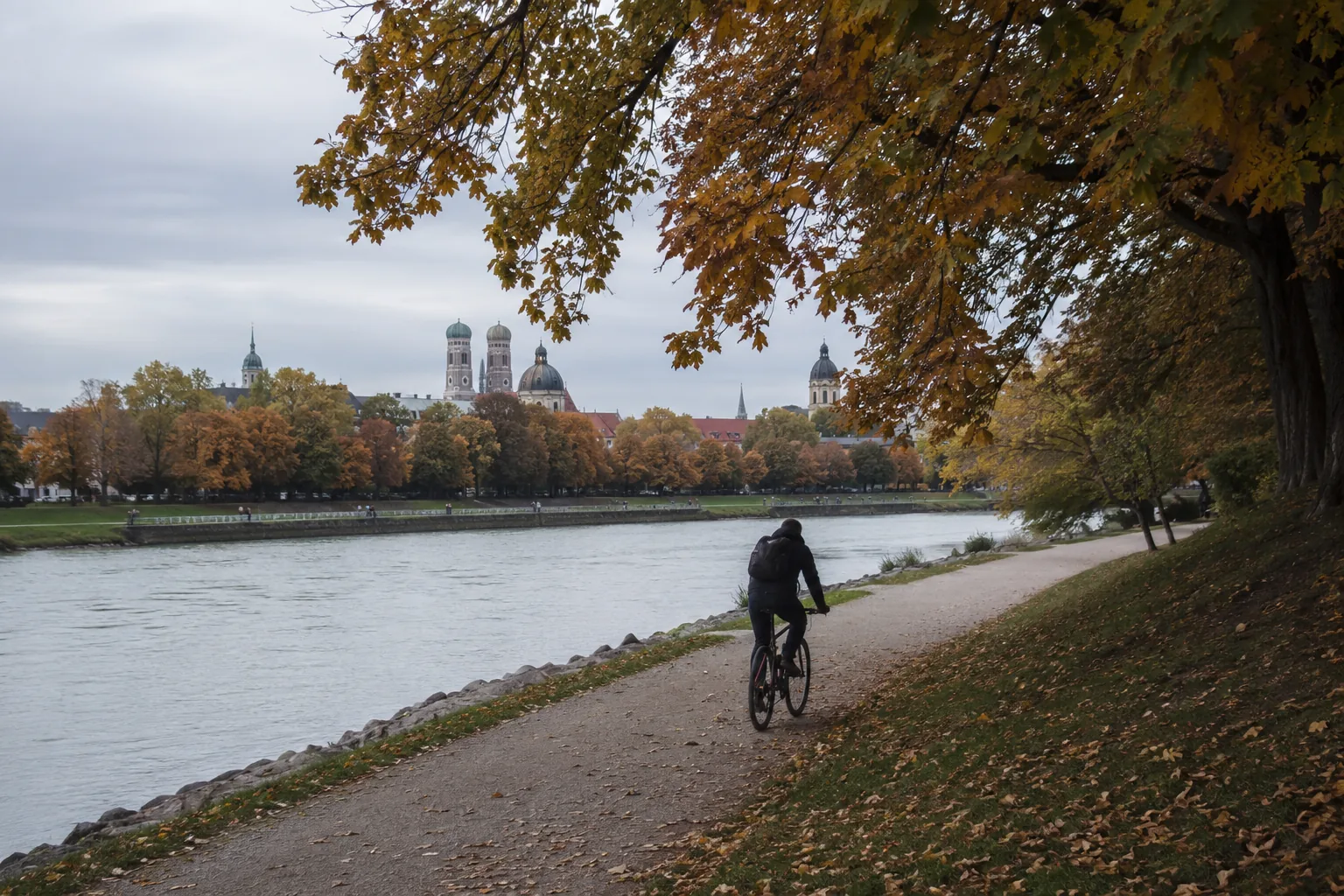
The English Garden is one of the largest urban parks in Europe and worth the walk for the Eisbach standing wave alone, where surfers ride a permanent river wave in the middle of the city, in October, in wetsuits.
Eat properly at least once. Bavarian food is heavier than the conference-buffet default and much better for it: Weisswurst with sweet mustard before noon, schweinshaxe, pretzels the size of your head, and the beer halls that survive perfectly well the other fifty weeks of the year. The conference dinner at the Augustiner Keller will give you one version of this. If you want the city’s food decoded rather than guessed at, the Munich walking food tour with Secret Food Tours works through the markets and the classics, and Viktualienmarkt is the obvious place to graze on your own between sessions.
For a half day, BMW Welt and the BMW Museum are a straight U-Bahn ride north and are genuinely good even if you do not care about cars. Nymphenburg Palace is the Baroque option to the west.
If you extend the trip, Neuschwanstein is the famous castle day trip roughly two hours south, and Dachau is a 30 minute S-Bahn ride from the centre, a sober and important few hours rather than a sightseeing stop.
Practical notes
October in Munich means daytime highs around 12 to 15C, cool evenings and a real chance of rain. Bring a proper jacket and shoes you can walk in; the centre is cobbled and you will cover more ground than you expect.
Germany is in the Schengen area, so attendees from many countries need a Schengen visa. Our conference timing analysis makes the case for starting visa paperwork at submission rather than acceptance, and mid-October is inside the window where a slow consulate becomes a real problem. ASE publishes visa support letters through its registration pages.
Almost everyone in the conference and hospitality trade speaks English. Cash is still more useful in Germany than in most of Western Europe, particularly in older beer halls and smaller restaurants, so do not rely purely on a card.
For what the whole trip is likely to cost, see our breakdown of academic conference budgets, and if you are weighing the conference rate against booking independently, we looked at whether the hotel block is worth it separately.