

The Big List of CS Conference Travel Grants and Scholarships
Last updated July 2026. We revisit this list regularly as deadlines and programs change.
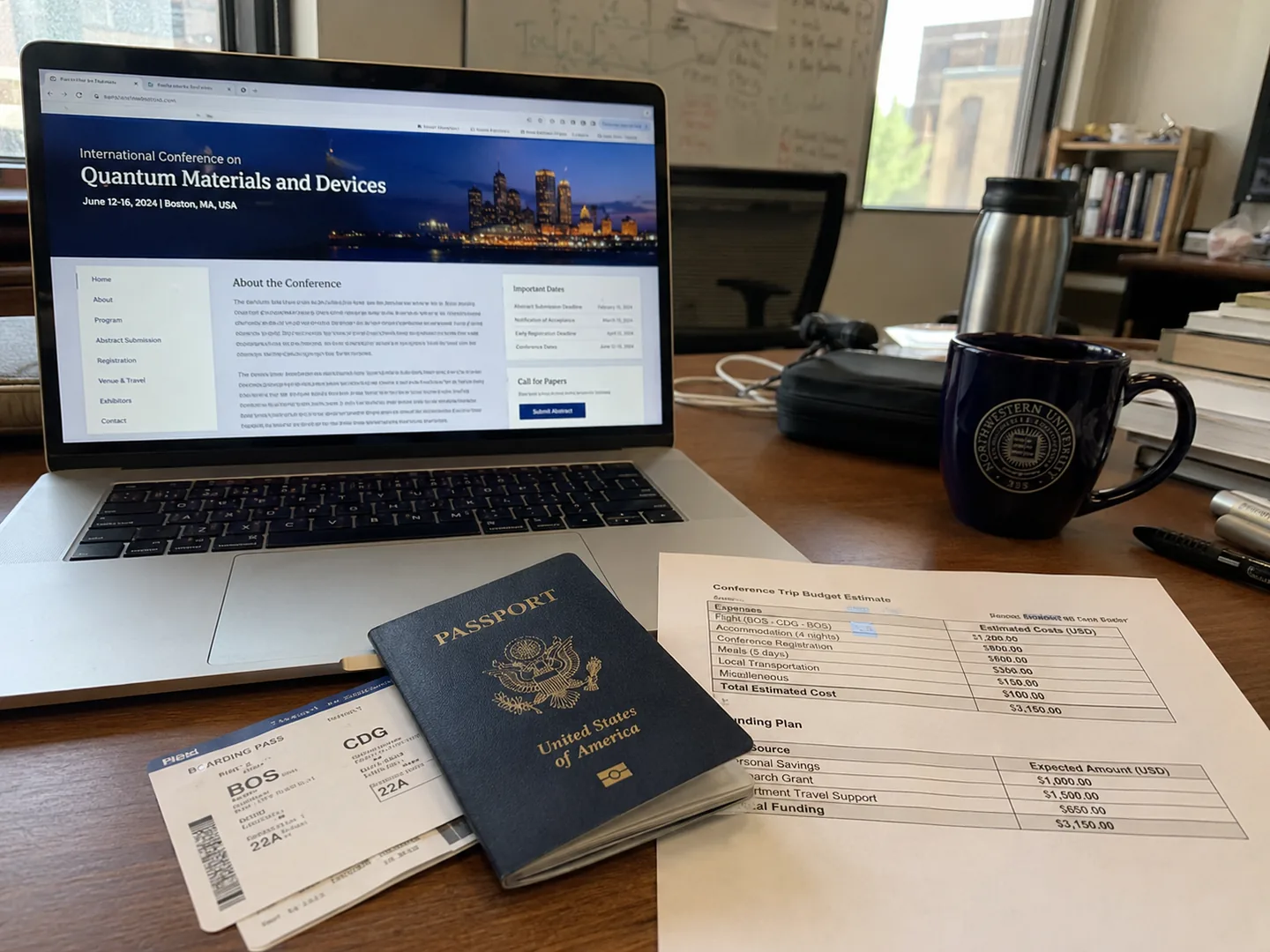
Attending a major CS conference typically costs $1,500 to $4,000 once you add registration, flights, a week of hotel, and food. For a grad student, that is real money, and every year people skip conferences they have papers at because they assume the cost is theirs to carry. It usually is not. There is an entire ecosystem of travel funding, and most of it goes under-applied-for because nobody puts the programs in one place.
This is that one place. The funding comes in layers, and the layers stack: the conference itself, the professional society behind it, external organizations, your university, and your national funder can each cover a slice of the same trip.
Start here: the conference’s own page
Almost every major conference has a travel grant, financial assistance, or student support page, usually under the Attend menu, and it appears 2 to 4 months before the event. In the United States, many conferences also receive National Science Foundation awards specifically to fund student travel; you apply through the conference’s travel grant page, not through NSF, which is why the program is easy to miss. Whatever else you do, check the conference site first and calendar the deadline. Our deadlines page tracks submission dates for hundreds of conferences, and each conference page links to the official site.
The big AI and ML conferences
NeurIPS Financial Assistance. NeurIPS runs one of the largest programs anywhere, with on the order of a thousand awards per year. It prioritizes student and junior postdoc authors, and the award is complimentary registration and up to seven nights of prepaid hotel. It does not cover flights or per diem, so budget accordingly. The volunteer program is part of the same application. Details here.
ICML Volunteer and Financial Aid. ICML’s program covers registration and hotel for attendees for whom the trip would be a financial burden. The 2026 cycle closed May 18 with notification June 1, so plan on an application window about two months before the conference. Serving as a strong reviewer helps: gold and silver reviewer designations are considered. Details here.
ICLR Financial Assistance. ICLR runs the same model as its sibling conferences: registration and hotel support plus a volunteer track. Details here.
AAAI Student Scholar and Volunteer Program. AAAI offers partial travel support to full-time students who submitted to the conference and have a letter of recommendation, and complimentary registration for student volunteers. AAAI membership is required. Details here.
ACL family Diversity and Inclusion subsidies. ACL, EMNLP, EACL, and NAACL each run D&I subsidy programs covering registration, travel, caregiving, and even bandwidth for remote attendance. They target researchers from developing countries and marginalized communities, students, and anyone facing financial hurdles. One caution: travel expenses are typically reimbursed after the conference, so you need to front the cash. Look for the “Diversity and Inclusion Subsidies” call on each conference’s site.
ACM SIG programs
The special interest groups behind ACM conferences run some of the most generous and least-known programs.
SIGPLAN PAC funds long-distance travel to SIGPLAN conferences such as PLDI, POPL, and ICFP for participants traveling from outside North America and Europe. It covers airfare, shared accommodation, registration, and meals, evaluated first-come first-served, so apply early. Details here.
SIGCHI Gary Marsden Travel Awards support attendance at any SIGCHI conference, including CHI. Eligible applicants include students, early-career researchers up to five years past graduation, and members facing financial hardship or lacking institutional support. Deadlines are rolling: the 9th of January, February, March, May, July, September, and November. Details here.
SIGSOFT CAPS assists attendance at software engineering conferences such as ICSE. It has three tracks: CAPS-GRAD for graduate student members, CAPS-UG for undergraduates including non-members, and, unusually, CAPS-KIDS, which helps cover childcare costs so parents can attend. Details here.
SIGCOMM GeoDiversity grants cover travel, lodging, and registration for students and early-career researchers from regions historically under-represented at SIGCOMM, such as Latin America and Africa, alongside the conference’s regular student travel grants. Details here.
SIGMOD student travel awards provide stipends for full-time students attending SIGMOD; membership is required at award time, and the awards have historically been supplemented by NSF funding. Details here.
SIGIR student travel grants are notable for breadth: one program covers SIGIR, CIKM, CHIIR, ICTIR, JCDL, and WSDM. SIGIR student membership required. Details here.
SIGKDD student travel awards for KDD are open to all full-time students in data mining or machine learning, and you do not need an accepted paper to apply. Watch the KDD site for the call, typically about two months out.
ACM-W Scholarships may be the most flexible program on this list: women students can apply for up to $600 for travel within their continent or $1,200 for intercontinental travel, to attend any CS research conference, ACM or not. Applications are reviewed on a rolling basis. Details here.
Security and systems
USENIX Grants cover students attending USENIX conferences including USENIX Security, OSDI, NSDI, and FAST. Recipients get complimentary registration plus help with hotel and airfare. Funding is limited and rarely covers the full trip, so treat it as one layer of the stack. Diversity grants run alongside the student program. Details here.
IEEE Security and Privacy student travel grants offer up to $1,500 covering registration and partial travel, hotel, and meals for full-time students. Preference goes to students working in security, showing financial need, or coming from institutions not usually represented at the conference. The same pattern repeats at CSF and SecDev. Details here.
Diversity organizations
Tapia Conference scholarships. The CMD-IT/ACM Richard Tapia Celebration funds a large share of its student attendees. Poster competition participants receive full registration, hotel accommodation, and a travel stipend of up to $600. Open to students at US institutions and faculty at Minority Serving Institutions. Details here.
LatinX in AI has awarded over 1,100 travel and registration grants for its events co-located with major ML conferences, prioritizing students from Latin America and US Hispanic-Serving Institutions. Details here.
Women in Machine Learning (WiML) provides travel funding for attendees of its workshops co-located with NeurIPS and ICML.
Corporate programs
Google Conference Scholarships cover registration, airfare, and accommodation for students and professionals from groups underrepresented in tech, with regional programs and per-conference timelines. Details here.
The Linux Foundation’s Dan Kohn Scholarship funds attendance at CNCF events such as KubeCon, with complimentary registration or travel funding of up to $2,500 for community members from underrepresented groups or with financial need. Details here.
National funders
DAAD Kongressreisen (Germany). Germany-based PhD candidates and postdocs presenting at conferences abroad can receive a travel subsidy of up to about 3,675 euros depending on destination, plus a materials allowance and daily attendance allowance. The catch is lead time: applications must be in at least 120 days before the event. Details here.
SIAM Student Travel Awards fund students attending SIAM conferences, including SODA: $650 for domestic travel or $800 for intercontinental, plus free registration, with presenters prioritized. SIAM awards over $240,000 in travel funding per year. Details here.
Most other countries have an equivalent channel, usually routed through your university: UKRI in the UK, NSERC in Canada, JSPS in Japan. Ask your department’s research office what conference travel support exists before assuming there is none.
If none of the above fits
Student volunteer programs. CHI, SIGGRAPH, UIST, NeurIPS, ICSE, and many others trade a modest number of volunteer shifts for free registration. Applications typically open 3 to 5 months before the conference and are competitive; they are also one of the best networking channels a first-timer can get.
Doctoral consortia. Many conferences fund doctoral consortium participants, covering registration and sometimes travel. If you are a PhD student, this is often the single highest-probability funding route, because the applicant pool is small.
Your own university. Departmental travel funds, graduate school conference grants, and student government travel awards are chronically under-used. They are usually small, a few hundred dollars, but they stack with everything above.
Your advisor’s grants. Most faculty grants include travel lines. If you have a paper accepted, the expected default in most groups is that the grant pays. Ask directly.
How to apply well
A few patterns hold across every program on this list. Apply early: several programs are first-come first-served or have rolling monthly deadlines. Stack layers: a volunteer slot for registration, a SIG grant for the flight, and a university fund for the hotel is a fully funded trip. Read the reimbursement terms: many programs pay after the conference, which means you front the money; if that is a problem, say so in the application, as some programs can prepay hotels or registration. And if you have a paper, say it prominently: authors and presenters get priority almost everywhere.
Once the funding lands, the same rule applies to your own booking: conference hotel blocks and early registration are dramatically cheaper than booking late. Our conference pages list dates, venues, and nearby hotels for hundreds of upcoming CS conferences to help you plan the rest of the trip.