

Pittsburgh Conference Travel Guide: IROS 2026 and CHI 2027
- Dates: September 27 - October 1, 2026
- Venue: David L. Lawrence Convention Center, Pittsburgh, PA, USA
- Airport: Pittsburgh International Airport (PIT) is 19 miles west of downtown
Pittsburgh is having a significant moment on the academic conference calendar. The city hosts IROS 2026 — the IEEE/RSJ International Conference on Intelligent Robots and Systems — from September 27 to October 1, followed by CHI 2027, the ACM flagship conference for human-computer interaction research, May 10-14, 2027. Both events land at the David L. Lawrence Convention Center on the Allegheny River waterfront. If you’re planning for either, here’s what to know.
The pairing makes sense. Pittsburgh is home to Carnegie Mellon University, one of the most influential research institutions in both robotics and HCI in the world, and the city has a genuine industry ecosystem built around autonomous vehicles and AI that goes well beyond the university. This isn’t a city that hosts these conferences as a neutral venue — it’s a city where the research actually happens.
The venue: David L. Lawrence Convention Center
The David L. Lawrence Convention Center sits on the north bank of the Allegheny River in the heart of downtown Pittsburgh, adjacent to the cultural district and a short walk from most conference hotels. It’s a LEED-certified building and one of the largest convention centres in the eastern United States, well equipped for events at the scale of IROS and CHI.
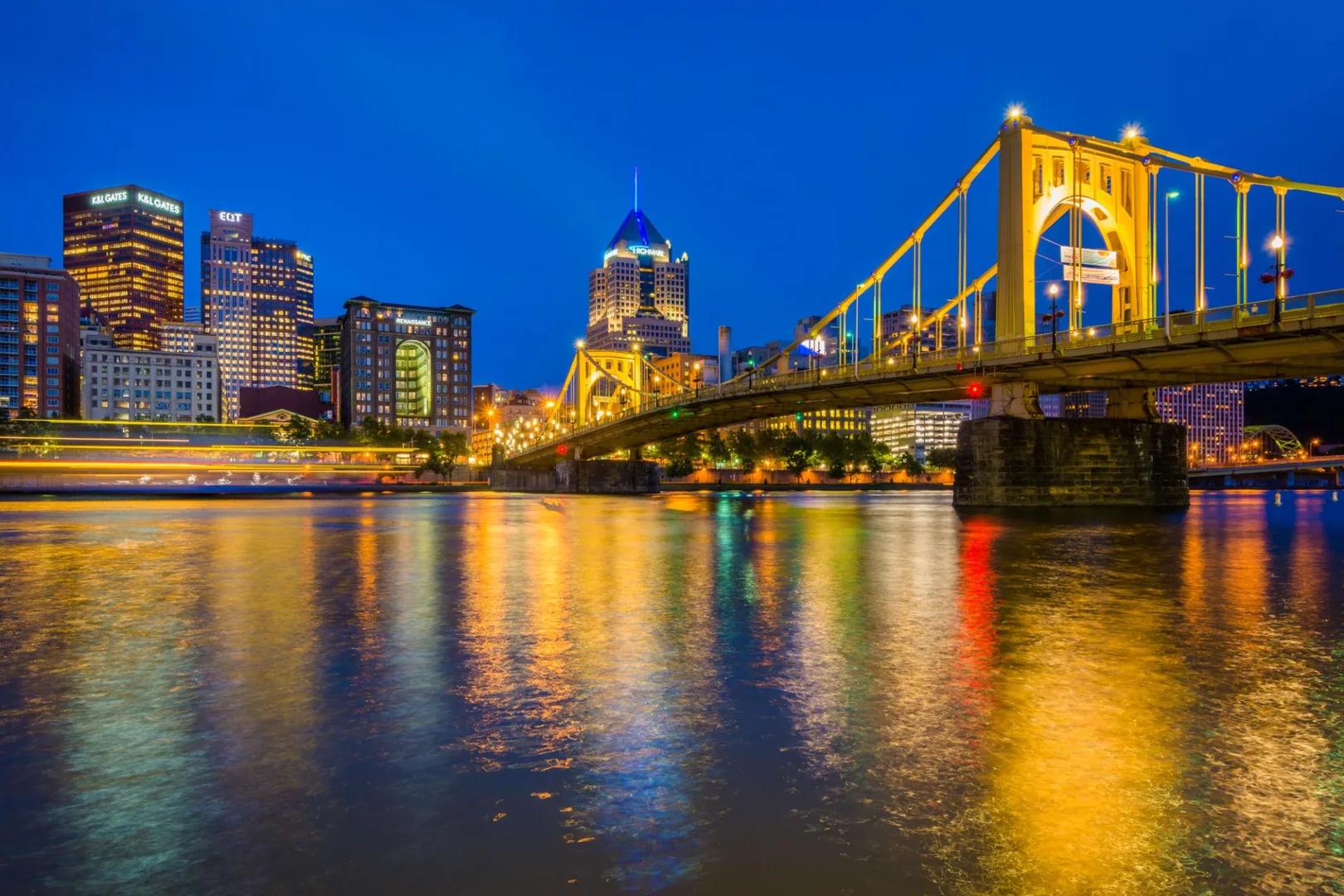
The riverfront location is one of Pittsburgh’s better surprises. The convention centre’s glass curtain wall looks directly out over the Allegheny, and the adjoining Roberto Clemente Bridge — a distinctive yellow suspension bridge — connects the venue on foot to the PNC Park baseball stadium and the North Shore. In September (IROS season) and May (CHI season), the riverside setting makes walking between sessions and the surrounding hotels a genuinely pleasant experience rather than a chore.
Getting to Pittsburgh
Flying in: Pittsburgh International Airport (PIT) is about 19 miles west of downtown. The drive or rideshare takes 30-45 minutes depending on traffic, typically costing $30-45 each way. There is currently no rapid rail link between PIT and downtown — the bus 28X runs hourly and takes about 55 minutes for around $2.75, which is economical for a solo traveller with light luggage but not practical for most conference attendees arriving with checked bags.
For those flying from New York, Philadelphia, or Washington DC, the Amtrak Capitol Limited and Pennsylvania services connect Pittsburgh to the east coast, and Greyhound/Megabus routes run from several cities. Pittsburgh Union Station is about a mile from the convention centre.
Driving: Pittsburgh has reasonable highway access from all directions. Parking downtown is plentiful compared to many coastal cities, though garage rates during a major conference week will be elevated. If you’re staying at one of the nearby hotels, driving is rarely necessary for the conference itself.
Pittsburgh in late September and early October (IROS 2026)
Late September and early October is arguably the best time of year to visit Pittsburgh. The summer humidity has cleared, temperatures sit in a very comfortable 15-22°C range through the day with cool evenings, and the city’s many trees — Pittsburgh is one of the most forested urban areas in the US — start to show the first of the autumn foliage. Pack layers for mornings and evenings, but a light jacket is all you’ll need through the day.
Rain is possible in early October but rarely sustained; an umbrella you can fold into a bag is sufficient. The weather is reliably better for outdoor exploring than a summer conference would be.
Pittsburgh in mid-May (CHI 2027)
May is spring in Pittsburgh, and typically a good month to be there. Temperatures run 16-22°C, the city’s parks and hillside neighbourhoods are fully green, and the Golden Triangle (the downtown peninsula) looks its best. Some rain should be expected — May is one of the wetter months — but rarely the kind that disrupts plans. A light waterproof layer is the practical packing addition.
CHI in mid-May is a good draw for an evening walk along the Allegheny waterfront after sessions. The light at that time of year lasts until around 8:30pm.
Where to stay near the David L. Lawrence Convention Center
All five hotels below are in the downtown core, within comfortable walking distance of the convention centre. Full listings with a map and current pricing are on the IROS 2026 and CHI 2027 conference pages.
Renaissance Pittsburgh Hotel (details) is a four-star Marriott property in the historic Fulton Building, steps from the convention centre. The restored Beaux-Arts building gives it character that standard business hotels lack — this is the top choice for attendees who want proximity and a distinctive stay rather than a generic modern tower.
Omni William Penn Hotel (details) is Pittsburgh’s grand historic hotel, open since 1916 on Mellon Square. Ornate lobbies, traditional service, and the kind of comfortable old-world atmosphere that makes a long conference week more enjoyable. A short walk to the convention centre and an excellent base for either conference.
Pittsburgh Marriott City Center (details) is a reliable four-star option in the downtown core with an indoor pool and fitness centre. Straightforward and consistently well-run — a solid choice for attendees who want Marriott points and a dependable experience without the price premium of the top properties.
Drury Plaza Hotel Pittsburgh Downtown (details) is a three-star property near the convention centre that punches above its star rating: free hot breakfast included every morning and free drinks and a light meal at the evening reception are both genuine value-adds for a week-long conference stay. A strong choice for attendees on a mid-range budget who want to keep food costs down.
Hampton Inn & Suites Pittsburgh Downtown (details) is a well-maintained three-star in the Strip District near the convention centre, with an indoor pool and hot breakfast. A reliable budget-conscious choice in the right location — the most practical option for graduate students or cost-conscious attendees.
Getting around Pittsburgh
Downtown Pittsburgh — the Golden Triangle between the three rivers — is compact and walkable. From most of the hotels above to the David L. Lawrence Convention Center is a 5-15 minute walk. The convention centre, cultural district, and Penn Avenue restaurant strip are all within comfortable walking distance of each other.
Beyond downtown, Pittsburgh’s geography is genuinely unusual: a city of steep hills, river valleys, and narrow bridges that can make distances feel longer than they look on a map. The Port Authority Transit bus network covers the metro area, and the T light rail connects downtown to the South Hills (though most conference venues are not in that direction). Rideshare — Uber and Lyft — is the most practical option for getting to Shadyside, Squirrel Hill, East Liberty, or any of the neighbourhoods east of downtown.
Pittsburgh also has two historic inclines — cable-car railways up the hillsides — that are worth experiencing. The Duquesne Incline on the South Side gives the most famous panoramic view over the confluence of the three rivers.
What to do in Pittsburgh
- Carnegie Museum of Art and Natural History - Two exceptional museums sharing one building in Oakland, 15 minutes from downtown; the natural history dinosaur halls and the art collection are both outstanding.
- The Strip District - Pittsburgh’s produce and specialty food market neighbourhood, best on Saturday mornings; excellent pierogies, Italian delis, and the original Primanti Brothers sandwich shop.
- Mount Washington viewpoint - Ride the Duquesne Incline up the hillside for the definitive Pittsburgh view: the Golden Triangle, the three bridges, and the three rivers converging below.
- Frick Art and Historical Center - Henry Clay Frick’s preserved estate in Point Breeze with a genuinely excellent small art museum (free entry) and the original Frick family car collection.
- Heinz History Center - The best museum of Pittsburgh’s industrial and cultural history, covering everything from the steel era to the Steelers; the WWII exhibit is one of the finest regional history presentations in the country.
- Lawrenceville neighbourhood - The most interesting area for dinner and bars east of downtown; Butler Street from Penn Avenue northward has the highest concentration of good independent restaurants.
Food and practical notes
Pittsburgh has a distinct regional food culture that’s worth engaging with. The Primanti Brothers sandwich — a large sandwich with the fries and coleslaw stuffed inside, not served alongside — is a Pittsburgh original; the original Strip District location is the right place to try it. Pierogies are deeply embedded in the local food culture via Pittsburgh’s Eastern European immigrant heritage, and excellent versions appear on menus across the city. Pamela’s Diner (multiple locations) is the local institution for breakfast, with enormous pancakes and a long queue that moves quickly.
Penn Avenue in the Strip District and Butler Street in Lawrenceville are the two corridors worth targeting for dinner during the conference week. The restaurant scene has improved significantly over the past decade and Pittsburgh is no longer the afterthought it once was on food rankings.
Tipping: standard US norms apply — 18-22% at sit-down restaurants.
Currency and payment: fully cashless options are available everywhere; cards and contactless payment are accepted universally across the city.
Full hotel listings, a venue map, and conference details for both events are at workwander.tech/conference/iros_2026 and workwander.tech/conference/chi_2027.