

International Joint Conference on Artificial Intelligence — 2026
August 15-21, 2026
Messe BremenBremen, Germany
AI Machine Learning Knowledge Representation Planning Robotics NLP
Important Dates
| Submission deadline | January 19, 2026 (closed) |
| Notification of acceptance | April 29, 2026 (passed) |
The International Joint Conference on Artificial Intelligence (IJCAI) is one of the oldest and most prestigious venues in the field, running continuously since 1969 and covering the full spectrum of artificial intelligence research. Topics span knowledge representation, machine learning, planning, natural language processing, robotics, and multi-agent systems, with an A* CORE ranking reflecting its standing as the premier general AI conference alongside AAAI. Since 2018 it has been held jointly with ECAI, the European Conference on Artificial Intelligence, expanding its reach across both academic and industry research communities worldwide. Workshops and tutorials are hosted at the University of Bremen in the days preceding the main conference at Messe Bremen.
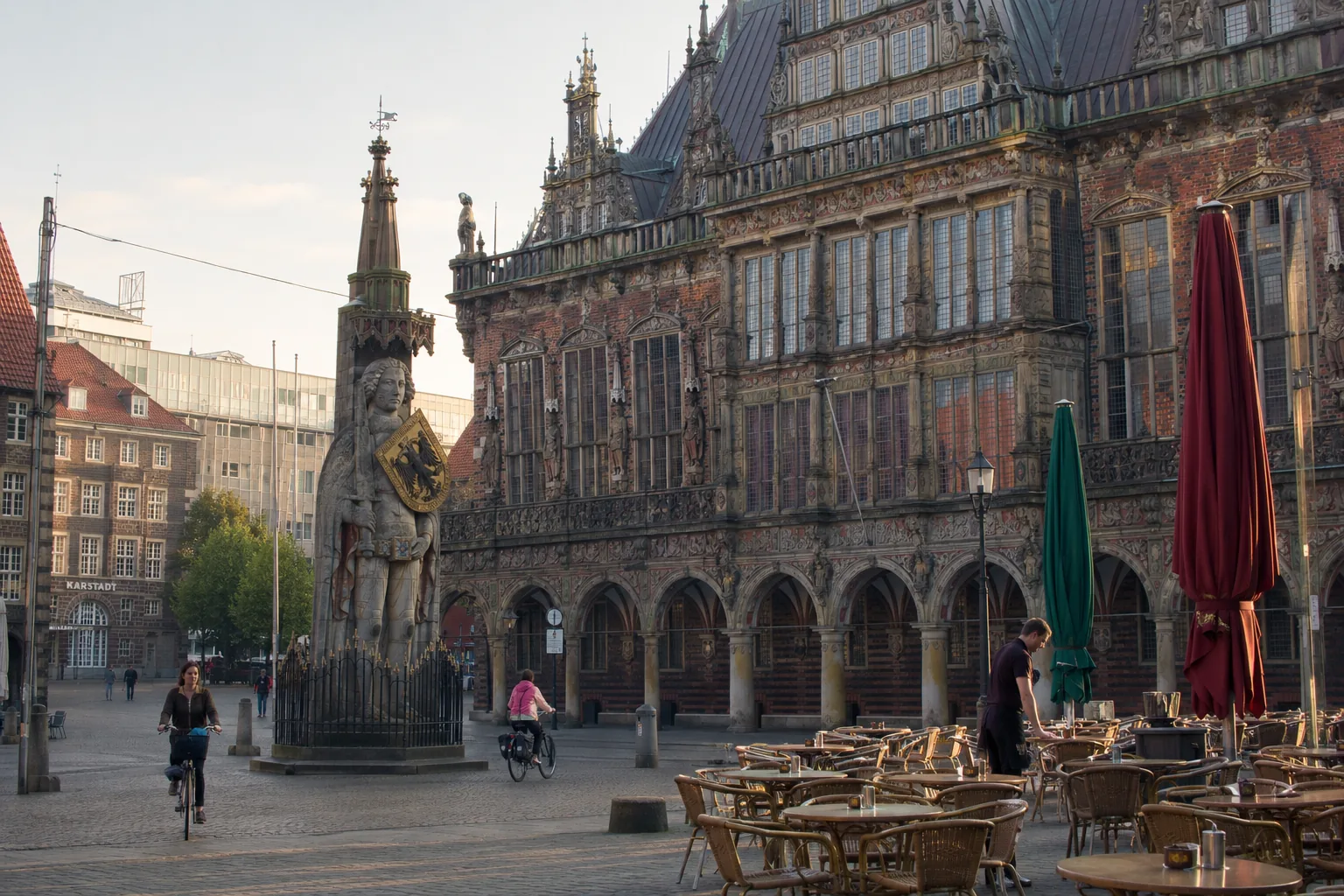
Venue
Messe Bremen
Findorffstrasse 101, 28215 Bremen, Germany
🔗 View full venue details
AutoAI meets Foundation Models
Explores how automated machine learning and neural architecture search interact with the era of large pre-trained models - covering prompt...
Federated Learning in the Age of Foundation Models
Addresses the intersection of federated learning and large foundation models - how to fine-tune or adapt large models across distributed...
Foundation Models for Social Good
Examines how large language and multimodal models can address societal challenges: climate change, healthcare access, education equity, disaster response, and...
Generative Code Intelligence
Covers code generation, program synthesis, automated debugging, and code understanding with LLMs - including benchmark construction, evaluation methodology, and safety...
Generative AI and Knowledge Graphs
Explores how knowledge graphs can ground and constrain generative AI outputs, and how LLMs can help build and query structured...
Neuro-Symbolic Intelligence for LLMs and Autonomous Agents
Bridges neural and symbolic AI approaches for building more reliable agents - logical reasoning over learned representations, formal verification of...
Robustifying Generative AI for Reliable and Human-Centric Systems
Explores robustness challenges in generative AI: distribution shift, adversarial prompts, hallucination mitigation, uncertainty estimation, and the design of reliable human-AI...
Safe Agentic AI Framework and Ecosystem Roadmapping
Focuses on frameworks and governance for deploying AI agents safely in real-world settings - covering containment strategies, risk assessment, human...
Social Choice and Learning Algorithms
Addresses the intersection of computational social choice and machine learning - fair division, voting mechanisms, multi-agent learning, and how algorithmic...
Spatio-Temporal Reasoning and Learning
Brings together researchers working on reasoning and learning over spatial and temporal data - knowledge representation, formal methods, and neural...
Value Engineering in AI
Examines how human values, preferences, and ethical principles can be formally specified and incorporated into AI systems - covering value...
Explainable Artificial Intelligence
One of the premier venues for XAI research, covering post-hoc explanation methods, interpretable model design, human evaluation of explanations, and...
Our picks for International Joint Conference on Artificial Intelligence attendees
A curated selection of hotels chosen for location, value, and fit for conference travellers.
ATLANTIC Grand Hotel Bremen
Bredenstrasse 2, 28195 Bremen, Germany
Stylish hotel in the historic city centre with a spa, refined dining, and strong guest ratings. A good fit for senior researchers...
Dorint City-Hotel Bremen
Hillmannplatz 20, 28195 Bremen, Germany
Solid business hotel near Bremen Central Station with a spa and comfortable working amenities. A reliable choice for attendees who want professional...
Maritim Hotel Bremen
Hollerallee 99, 28209 Bremen, Germany
Large convention hotel adjacent to Burgerpark with an indoor pool, spa, and multiple dining options, close to both Messe Bremen and the...
Motel One Bremen
Am Brill 20, 28195 Bremen, Germany
Design-budget chain at the Am Brill tram hub on the edge of the old town, with small smart rooms at fair rates...
Parkhotel Bremen
Im Burgerpark, 28209 Bremen, Germany
Bremen’s premier 5-star property set inside the historic Burgerpark with lake views, a full spa, and elegantly furnished rooms. The top choice...
Prizeotel Bremen-City
Theodor-Heuss-Allee 12, 28215 Bremen, Germany
The original property of the Bremen-born budget-design brand, right behind the central station and a 10 minute walk to the Messe -...
Radisson Blu Hotel Bremen
Boettcherstrasse 2, 28195 Bremen, Germany
Modern four-star at the entrance to the historic Boettcherstrasse, steps from the Marktplatz - the polished old-town base for attendees who want...